Showing posts with label flowers. Show all posts

Friday, 31 July 2015

A haiku

I dont often write poetry, but I felt like this picture deserved one. Cherry blossoms, from the edge of the Tulip garden in Tonami, Japan.


Soft in the warm light
 Twirling, dancing, daintily
Spring is upon us


Saturday, 23 May 2015

Dear Rocket, A story about Japan... Part One: Plants

Rocket, you know I travelled to Japan to attend Arctic Science Summit Week, 21 - 30th April, 2015.

I ventured out into the countryside, a kiwi keen to learn more about various Shogun and Emperors, while sampling the local food that left me feeling stuffed - and nervous about what a whole firefly squid might do in my belly!

(Lets be real, I know it will be digested, but eating it whole was certainly an experience....)

Koi carp were common in the ponds and water features - it was striking to see them contemplated so quietly, while here in NZ, they are a massive pest!

Koi carp in Toyama Castle park. Came up to say hello and nibble my fingers!

Then all of the other carp arrived, things got a bit messy... I removed my fingers from the water, and left smelling of fishy pond water
The conference was extremely interesting, but on my day off, I found something which delighted this botanist's senses... The Tonami Tulip Fair! The Dutch probably wouldnt be impressed, but I found it so colourful, it smelt like hot summery days and looked like a vibrant rainbow!


I spent a few moments watching the cherry blossoms sway in the warm breeze!
The Sakura, or Cherry Blossoms, were blooming at their best in Toyama before I arrived, I managed to catch these in a shady spot of the tulip fair! The Sakura 'front' moves from south to north in the Spring - then in Autumn, the Autumn leaf 'front' moves back down the country from north to south.

In the Botanic Gardens in Kanazawa, I saw trees, with all their branches propped up! Turns out, when it snows in Winter, the boughs of the trees can snap under the weight of all the flakes of frozen water. Using poles to hold them up = problem solved! Long-lived trees with fascinating scaffolding.


Sunday, 25 May 2014

Creative Non Fiction - #2

Since attending this creative non fiction workshop (see previous post), I have realised that my natural tendency in writing my PhD, was in fact creative non fiction. I wanted to add in little bits about my personal experience, sprinkle anecdotes through, so as to make something readable to everyone.

But lets face it, not everyone is going to want to read about how many poppy seeds I manually counted in 2010 (it was over 22 thousand by the way), the changes in experimental protocol in order to improve collected data, or the justification of use of particular statistical models....

Already I feel myself slipping into the 'science speak'!!

So today's challenge was to take an aspect of my thesis (for example, insect visitation) and to write it in a creative, non fiction form.
Selection of insects in Dryas octopetala flower
Endalen is the warmest valley in the Adventdalen group - likely due to the lack of glacier at the head of the valley in my opinion. I spent many days there, not only basking in the sunshine on the warm tundra, but watching for insects visiting flowers. I observed them (with help of course!) not only basking in the sunshine, but feeding, walking and flying. There are many flowering, thermophilic plants in Endalen, including the 'tallest' tree; a Betula nana specimen that if it were supported vertically would be nearly a meter in height. Endalen is also home to many flying insects. I say flying insects, because these are the most likely to be visiting flowers.

Flying insects can exert a selective pressure upon the floral species they are visiting. If you were a bumblebee who hated the bland, boring view of white flowers, especially in comparison to a deep, welcoming blue, you would visit the blue flower rather than the white. If you continued to do this, time after time, season after season, only the blue flowers would be selected for within the floral population - after a few years you may not have to worry about the awfully plain white flowers coming into your bumblebee field of vision as that colour would have been discontinued!

In Endalen, there is a fly that seems to love the creamy petals and fluffy yellow center of Dryas octopetala. This fly is of the Rhamphomyidae family, and is commonly known as the 'Dancing Fly'. The dancing is in reference to the mating actions of the males, who 'dance' around the females attempting to impregnate her (much like that of the dance floor on a Friday night in some establishments!). I observed many of these flies hanging out in Dryas flowers - basking, feeding, walking and, if I got too close or disturbed them, flying away across the tundra. I always wondered how the flies saw the tundra. Did the patches of creamy, pale Dryas flowers stand out like giant dinner platters? Maybe one day I shall find out...

'Dancing Fly' in Dryas octopetala outside UNIS building in Longyearbyen


Creative Non Fiction

On the weekend, I attended a workshop given by Rae Roadley. She is the author of "Love at the end of the road", which refers to a house down at Batley on the Kaipara Harbour (you can see it from Otamatea marae). It was part of the NorthWrite Conference/workshop series run in part by the New Zealand Society of Authors
NorthWrite Website

Before I went, I had no idea what 'creative non fiction' was, and even since I am not totally sure... I can say that it is a merging of fact and fiction, where facts become friendly to the reader.

Now, since having written a PhD thesis, I found this thought slightly bemusing - facts cant become friendly, they are simply facts. You put them all together, use them as evidence, back up your arguments - there is nothing creative as such about that!

But we did an exercise, where the instructions were to imagine a place/building/outdoor space that is important or special to you. Describe the physical aspects, history, why I like/dislike it and so on. Then put yourself in that space, and write 1 - 2 paragraphs about emotions it evokes, how you feel about it and why, plus some facts (eg age, colour, etc). I found this exercise fascinating - first, because it was not after seriously researching some aspect of flower colour. Second, because the facts simply 'fit' in after some emotional creations!

Here is my short paragraph:

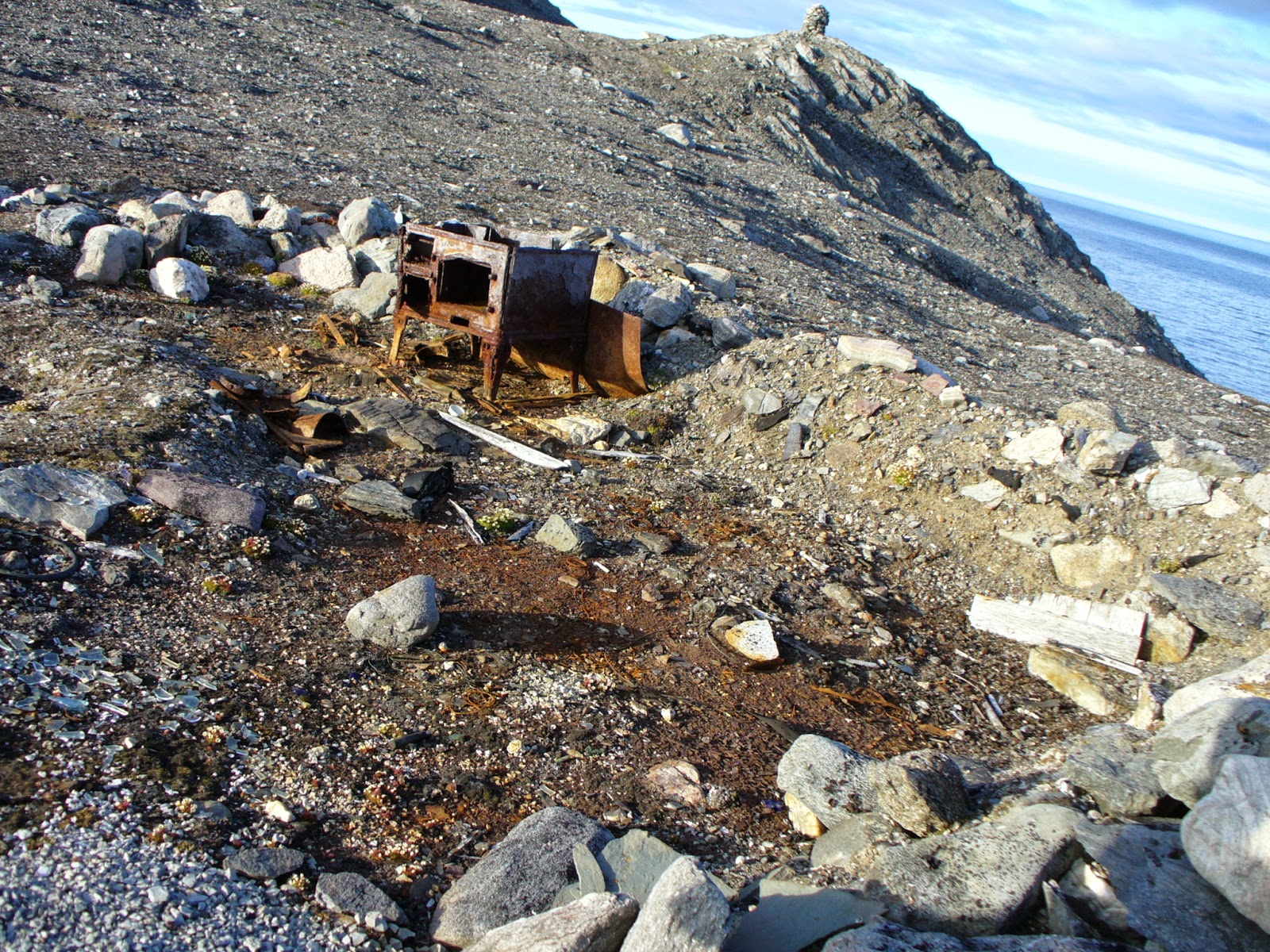
As I walked up the edge of the small, rocky beach onto the narrow neck that connects Bicayahuken to the mainland, the late afternoon angle of the sun hit me right in the face. A glacier, shining blue-white was edging down into the bay. The bay itself looked like something from the east coast of New Zealand. I felt like an early explorer, on my own heroic adventure despite being part of a student group. Biscayahuken is a small point of land in the north of Spitsbergen. It is named after the Biscay Whalers that were present in Svalbard during the 17th and 18th Centuries and has experienced human inhabitation. There were few remnants of human occupation these days. The rocky outline of a small hut with permafrost-churned grave sites nearby. Maybe they died from illness, perhaps old age. Noone in the group knew, and that seemed a poor legacy to have left behind. Rusted nails, broken glass and odd pieces of wire and such were strewn about, in between the small clumps of Saxifraga caespitosa. I could see that nature was simply going on, as it had done even when the occupants of the graves had been standing where I was.


Hut remnants at Biscayahuken, 2010
Thats as far as I got in the last half hour of the workshop. Interesting process, and definitely something I shall pursue! Rae Roadley was very adamant that one should be a kind narrator.

The view of the glacier
Some things are best left unsaid, and one persons recollection of a 'fact' may well be very different from anothers! The one saying of note that struck me was this, in the words of Micheal King (perhaps similar to W.B. Yeats?):
                                                 "Tread softly for you tread on my life"


Saxifraga cespitosa


Friday, 28 February 2014

Writing Boot Camp Day 1 - Telling a good story

Lesson #1 - Telling a good story.


This may be cheating - there wasnt any mention of it in the Boot Camp write up - but I am already stuck for ideas to write about so I thought I would write about this photograph.

I took this picture in March of 2012 during a trip up the Maungatua Mountains (just inland from Dunedin, South Island, New Zealand). It is the delicately veined, pale white petal, dark blue anthers and lime green stigma of Gentiana bellidifolia (it may be a different gentian species, but this is my best guess). A day in the life of this flower consists of waiting for the sun to come, bright rays pouring over the edge of the mountain, sparkling off the nearby tarn and slowly heating the closed flower. At a certain temperature (not sure what it is, but I watched a gentian open on the Remarkables near Queenstown after a night of snow) the petals unfurl, and the sun can shine in and gently heat the anthers and stigma. Insects will visit this flower, small flying ones, that cluster in the base either drinking nectar or basking in the warm sunshine. Maybe other crawling beasties will visit - and nibble away at the petals, something I imagine would taste like soft pancakes.

As the sun gets higher, then lower, the whole cycle of floral opening begins, but in reverse. The insects leave, the flower is sucked dry, and the petals begin to slowly furl up till closing time. In the night, little things scurry around, up and over the flower, ignoring the ripening seeds inside the closed petals. During the previous day, one, maybe two or three of the small flying insects brushed against the receptive stigma leaving a few grains of pollen stuck to the surface. That began the process of plant reproduction, and within a few days the ovary below the stigma will be dark purple and swollen with brand, new seeds.

I dont know if that is a good story. I like it but I have spent a large part of my life immersed in the study of plant sex, flower colour and reproduction!! It takes all types =)

Day One of Boot Camp - successfully completed. Feeling positive and optimistic about developing a writing habit!


Thursday, 8 August 2013

The end is nigh

I am all too quickly approaching the finish line!

I am working frantically to get a final copy of my thesis prepared to be handed in. It has been such a journey, and so busy just lately that I have completely neglected the blog!

However, I have not neglected the approaching Spring. Made myself a wee garden out of long pots, with some Polyanthus for colour in between the rocket that is racing away in the warm weather and the lettuce that is more sedately sprouting.

Furthermore, I have been venturing into the social media scene on Twitter, with "Tweet Your Science". Has made me quite thoughtful about how science is communicated, and whether or not simply sharing information with someone is enough to change their mind about an issue. Also about publishing my work from my thesis - it seems that academia is never going to end sometimes... But daydreaming about future adventures is enough to keep the motivation up today, here is hoping the adventures continue in the polar theme!

Springtime Camellias on the windowsill

Saturday, 8 December 2012

Cutting Some Shapes on the Dance Floor

Flower Shape

Flower shapes can be divided into a number of classes. Here is a quick look at the common shapes, and some of the Arctic species that fall into the shape catergories:


Bowl (aka Parabolic bowl)

This shape is good for solar power apparently! The sides of the bowl reflect a large proportion of light into the center, allowing for maximum power production. In flowers, the same concept applies, with the center of Svalbardvalmue (Papaver dahlianum) being the 'hot spot' of the flower (below).
Papaver dahlianum in Endalen
D. octopetala in Adventdalen, Svalbard


Saucer

This is like a flat bowl. Not so much reflection of the sides and into the center, but there can be some. Dryas octopetala is a good example of the saucer shape, the eight petals form a shallow dish, with the anthers and ovaries in the very center of the 'saucer'.
D. octopetala in Adventdalen, showing common saucer shape.


Fluffy balls of cotton wool!


Sphere

The spherical shape can be applied in a few different ways. Arctic cotton grass is a sphere, with the fluffy balls on top of the stems. However, many Asteraceae species can also be considered spherical, such as Erigeron humilis.
Erigeron humilis below Hjorthamna


Thursday, 13 September 2012

Saxifraga, you're so sexy...

Saxifraga species from Svalbard
The genus Saxifraga contains a wide variety of species. Many of these are found on Svalbard, 14 species counted from Rønning's 'Flora of Svalbard'.


Saxifraga oppositifolia is one of the species that I have come across most often. The species name "oppositifolia" is describing the leaves - small, stiff leaves that lie opposite one another. When you look down at a shoot, it will look like a square if the leaves are densely packed.  

It is one of the earliest flowering species (have seen it flowering in Endalen, with intense, purple-pink flowers at the end of May). In Norwegian, it is Rødsildre, or Purple Saxifrage. It is widespread throughout Svalbard. It has two growth forms, creeping and tufted. It has been suggested that these growth forms reflect different environments (creeping on ridges, tufted in less exposed places), but no obvious pattern has been identified.

Purple, tufted

White, tufted


S. oppositifolia also has two main flower colours, making it colour polymorphic. These colours are a dark pink to purple, or a very pale pink to white. I have observed large, iridescent flies (Calliphoridae) visiting S. oppositifolia flowers, but they did not seem to be choosing one colour over another.


In 2011, I took part in the International Polar Year Field School (held in Svalbard, see link: IPY Field School Information ). I guided a group of students in investigating heating and size in S. oppositifolia (it was supposed to be Papaver dahlianum, the Svalbard Poppy, however I was unaware that it does not grow on the calcareous soils found near Nordenskjoldbreen in Billefjorden). Although they found no significant effects of heating (Poster entitled "Sexyfraga" - Does size matter to heat things up?"), it was an interesting weekend looking at many different S. oppositifolia plants.